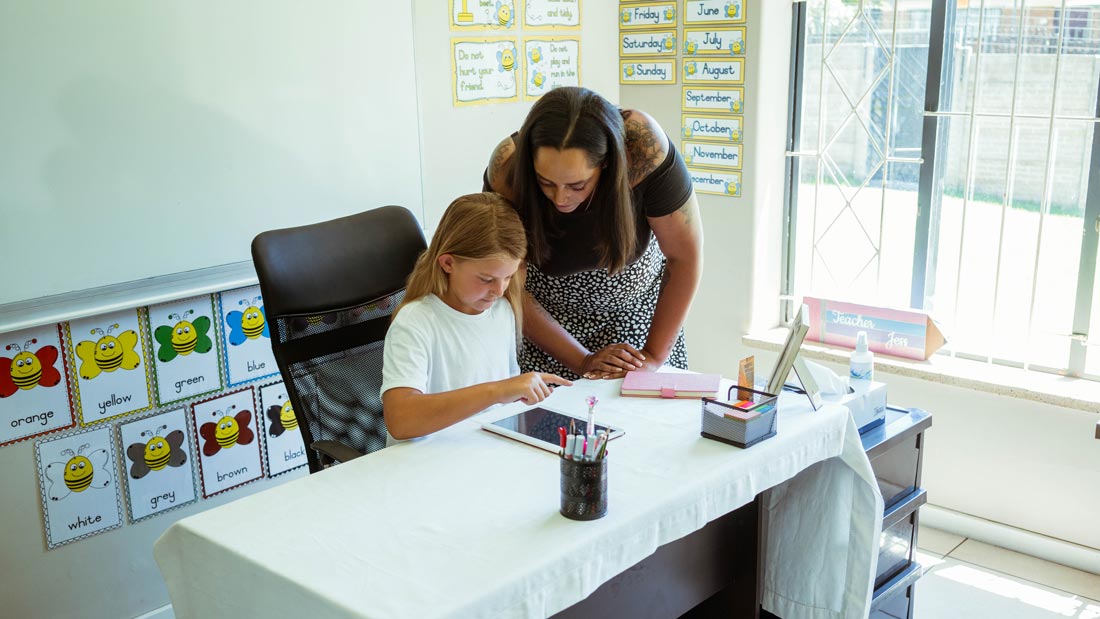
Mastering math word problems is vital to translating abstract mathematical concepts into real-world applications, bridging the gap between theory and practice. This guide dives deep into practical strategies that enhance students’ ability to dissect, interpret, and solve these problems. Drawing from a wealth of educational resources, we offer insights designed to elevate students from mere navigators to adept problem solvers in the world of math word problems. Let’s jump in.
Guide to Solving Math Word Problems: A Positive Approach
Survey the Problem
Surveying the problem involves reading and visualising the scenario. Identifying the problem’s objective, drawing a picture, and recognising similarities to previously solved problems lay the groundwork. Reading for a general understanding precedes a more detailed examination, ensuring clarity on the end goal.
Break the Problem into Parts
Systematically breaking down the problem by listing given and unknown facts, understanding each word’s meaning, and estimating outcomes creates a roadmap for solution development. Careful reading, possibly multiple times, is encouraged, with an emphasis on gaining a complete understanding of the question.
Work the Problem One Step at a Time
A structured problem-solving skill involves rewriting facts, expressing the unknown using variables, writing out each step, and distinguishing known from unknown facts. Formulas and equations derived from understanding the problem guide students through complex problem-solving, fostering a systematic approach.
Know Where to Look for Help
Encouraging independence in learning and seeking help is advocated, but with a focus on hints rather than direct solutions. Utilising resources like instructors, classmates, math centres, or tutors enhances problem-solving skills. After seeking initial help, reworking the problem individually ensures understanding and replicability.
Read more: Careers that need maths
Check Your Results
As word problems demand time and effort, ensuring correctness becomes imperative. Labelling answers, assessing reasonableness, and substituting answers back into the original problem validate the accuracy of solutions. Understanding the significance of responses enhances overall problem-solving proficiency.
Math Problem Solving Strategies: Navigating Challenges
C.U.B.E.S.: A Specific Approach
The C.U.B.E.S. strategy involves circling important numbers, underlining the question, boxing keywords, eliminating extra information, and showing the solution step by step. While offering a specific methodology, attention to reading comprehension is essential, ensuring a holistic approach to problem-solving.
R.U.N.S.: Strategy with a Plan
R.U.N.S., or reading the problem, underlining the question, naming the problem type, and writing a strategy sentence, requires students to categorise problems and formulate a plan. While effective, the time-consuming nature of writing strategy sentences for each problem warrants consideration.
Teaching the C.U.B.E.S. Strategy
When teaching the C.U.B.E.S. strategy to your child, you can use the following example:
Example Word Problem:
“Sarah has 16 apples. She gives 4 to her friend and then buys 8 more. How many apples does she have now?”
C.U.B.E.S. Approach:
- Circle Important Numbers:Have your child circle the numbers in the problem: “Sarah has 16 apples. She gives 4 to her friend and then buys 8 more.”
- Underline the Question:Underline the question to know what needs to be found: “How many apples does she have now?”
- Box Keywords:Box in the action words or phrases that indicate mathematical operations: “gives” and “buys more.”
- Eliminate Extra Information:Look through the problem together and cross out any information that isn’t needed to solve the problem. In this case, there is no extra information.
- Show the Solution Step by Step:Write out the steps to solve the problem:Start with 16 apples.
- Subtract the 4 given away.
- Add the 8 bought.
- Calculate the final number of apples.
Teaching the R.U.N.S. Strategy
The R.U.N.S. strategy can be taught through an example like this:
Example Word Problem:
“There are 23 students in a class. Some students are absent today, and only 18 are present. How many students are absent?”
R.U.N.S. Approach:
By applying these strategies with practical examples and guiding your child through the process, you can help them understand and use these methods effectively when solving math word problems.
Read more: Positive attitude towards maths
- Read the Problem: Read the problem aloud with your child to ensure they understand the scenario.
- Underline the Question: Together, underline the part of the problem that asks a question: “How many students are absent?”
- Name the Problem Type: Identify the type of problem. Discuss with your child that this is a subtraction problem because it involves finding out how many students are missing from the total.
- Strategy Sentence: Help your child write a sentence that outlines the strategy they will use: “If I subtract the number of students present from the total number of students, I will find out how many are absent.”
Empowering Success in Math: Your Journey Starts Now
Embark on the journey to math mastery with your child. Explore strategies that make solving math word problems a rewarding experience, and guide your child to approach each question with curiosity and confidence. Each child’s path is unique, and the proper support can turn math into an adventure filled with growth and discovery.
iRainbow’s unique offline education software teaches maths and math word problems in an easy-to-understand manner. If you need help, consider signing up today.
Related Posts

Help Your Child Succeed
iRainbow provides gamified activities and a free AI Tutor - all aligned with CAPS and IEB curricula. 15,000+ video lessons available as an add-on. One subscription covers all your children.